Ceramic CoatingPaint Protection Film
Fall is the best time of year to apply a ceramic coating because moderate temperatures between 50°F and 80°F (10°C–27°C) and balanced 40% to 60% humidity create the ideal curing environment for SiO2 chemical bonds before winter road salt and freezing moisture hit.
Why Fall Weather Creates the Perfect Curing Environment
Professional ceramic coatings are made of silicon dioxide (SiO2) nanoparticles that cross-link with your vehicle’s factory clear coat. That chemical bonding process is highly sensitive to ambient temperature and moisture levels.
During the summer, flash-curing in 90°F+ heat can cause high spots and uneven leveling. In the winter, freezing temperatures can prevent the coating from fully hardening, reducing its overall lifespan.
- Optimal Temperature Range: Fall reliably offers daytime garage temperatures between 50°F and 80°F (10°C–27°C), allowing the solvents in the ceramic formula to evaporate at a controlled, even rate.
- Ideal Relative Humidity: A humidity level of 40% to 60% helps SiO2 polymers cross-link uniformly without premature sweating or streaking.
- Zero Extreme Weather Spikes: Avoiding sudden summer thunderstorms or sudden winter freezes ensures the coating’s crucial 24- to 48-hour dry-cure window goes undisturbed.
Why You Should Protect Your Car Before Winter Hits
Once the temperature drops, your vehicle faces the most chemically aggressive driving conditions of the year. Unprotected bare clear coat is porous, allowing winter contaminants to etch, stain, and oxidize the paint surface.
Winter Hazards vs. The Ceramic Barrier
- Road Salt & Liquid Brine: Municipalities spray highly corrosive magnesium chloride brine before snowfalls. A ceramic coating provides an impervious high-pH chemical barrier that prevents salt from eating into the clear coat.
- Freezing Moisture & Frost: Snow and slush trap abrasive grime against your panels. Because ceramic coatings are extremely hydrophobic, freezing slush slides off effortlessly instead of bonding to the paint.
- Falling Leaf Tannins & Sap: Autumn leaves release acidic tannins when wet. On bare paint, these leave permanent yellow-brown stains within 48 hours; on a coated surface, they wash off with water.
- Snow Brush Scratching: While a ceramic coating is not bulletproof against heavy scraping, its slick surface reduces the surface friction that causes winter swirl marks from snow removal tools.
Interactive Winter Hazard vs. Ceramic Protection Simulator
Explore how different winter hazards affect bare clear coat compared to a SiO2 ceramic-coated surface:
Key insight: Municipal road brine is formulated to stick to road surfaces—which means it also bonds aggressively to unprotected car panels. A cured ceramic coating prevents brine from gaining physical adhesion.
The Pre-Winter Paint Correction Advantage
Applying a ceramic coating in autumn also gives you the chance to erase the wear and tear your paint accumulated over summer road-trip season.
- Stripping Summer Contaminants: A full pre-coating decontamination wash strips away baked-on bug proteins, tree sap, and sprinkler mineral spots.
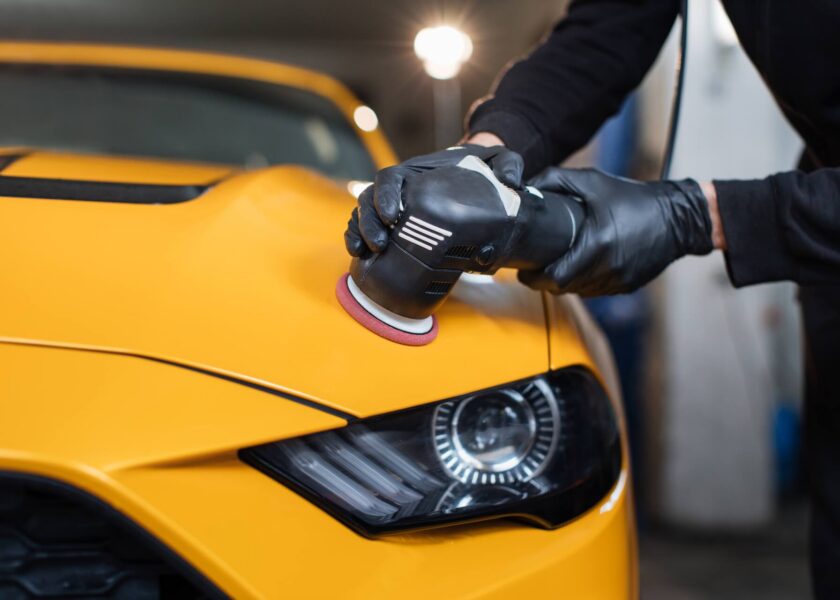
- Correcting Wash Swirls: High-speed polishing removes the micro-scratches caused by summer dust and quick-detailer wipe-downs.
- Locking in Gloss for Winter: Once the paint is leveled and polished to a mirror finish, the coating seals that depth in before winter grime can dull your vehicle’s appearance.