

Ceramic CoatingPaint Protection Film
The crisp air, the changing leaves, the pumpkin spice—fall is undeniably beautiful. But if you park your car outside, autumn is quietly staging a daily assault on your clear coat.
While winter salt and summer UV rays get all the attention, fall introduces a unique cocktail of physical and chemical threats that can permanently damage your car’s finish. Here is what is actually happening out in your driveway, and how Paint Protection Film (PPF) can stop it.
Even a few damp leaves left on the hood overnight can trigger chemical etching in the clear coat.
If left sitting for a few days, the silhouette of the leaf can become a permanent stain.
The Autumn Threat Level
Fall weather brings three distinct hazards to your vehicle’s exterior:
- The Acidic Leaf Trap: When leaves get wet and stick to your hood, they begin to decompose. During this process, they release tree sap and tannic acid. This highly acidic mixture eats directly into your clear coat, causing permanent discoloration and etching in a matter of days that usually requires aggressive machine polishing to fix.
- Acorns and Pinecones: Think of acorns as nature’s hail. Falling from a 40-foot oak tree, a dense acorn carries enough kinetic energy to leave micro-dents and chip the brittle top layer of the clear coat upon impact.
- Morning Frost and Dew: As temperatures drop overnight, morning dew and light frost trap airborne dirt and dust onto the paint. When you casually wipe the frost off your hood or roof with a sleeve or a stiff snow brush, you are dragging that abrasive dirt across the finish, creating a dense web of micro-scratches and swirl marks.
To combat these environmental hazards, many drivers are turning to Paint Protection Film, a transparent, high-impact urethane layer.
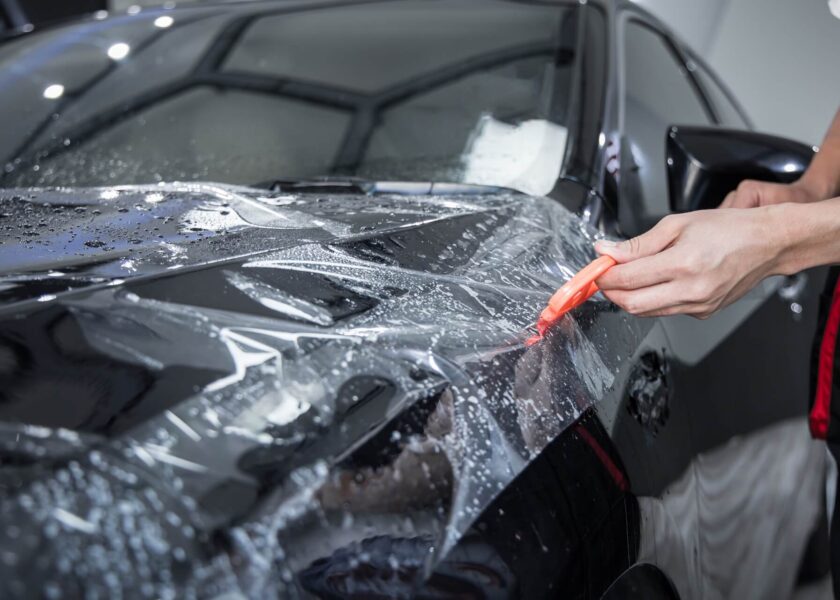
Professional installation ensures the film is perfectly contoured and virtually invisible on the body panels of the vehicle.
What is Paint Protection Film (PPF)?
Paint Protection Film (often called clear bra) is a highly durable, transparent thermoplastic urethane film applied directly over your car’s factory paint. Originally developed for military use to protect helicopter rotor blades from shrapnel and debris, it has evolved into the ultimate automotive armor. Think of a phone screen protector; but for your car!
How PPF Defeats Fall Weather
Here is why PPF is the best investment you can make before the leaves start falling:
- Chemical Immunity: PPF acts as a sacrificial barrier. When acidic wet leaves, bird droppings, or tree sap land on the car, they sit on the film, not the clear coat. Even if the film is exposed to extreme tannic acids, your factory paint remains untouched underneath.
- Self-Healing Technology: This is where PPF feels like magic. The top layer of the film contains elastomeric polymers that naturally return to their original shape after being disturbed. If a falling acorn or a stray branch leaves a surface scratch in the film, exposure to heat (like parking in the sun or running the engine) causes the scratch to literally melt away and heal itself.
- Hydrophobic Surface: Premium PPF is highly hydrophobic, meaning water beads up and rolls off rapidly. Morning dew, frost, and wet leaf sludge have a much harder time sticking to the car, making your weekly autumn car wash incredibly fast and frictionless.
The Bottom Line: You can’t control nature or the environment, but you can control what they land on. Protecting your vehicle with PPF preserves the factory finish, maintains its resale value, and lets you enjoy the autumn season without stressing over your paint job.